
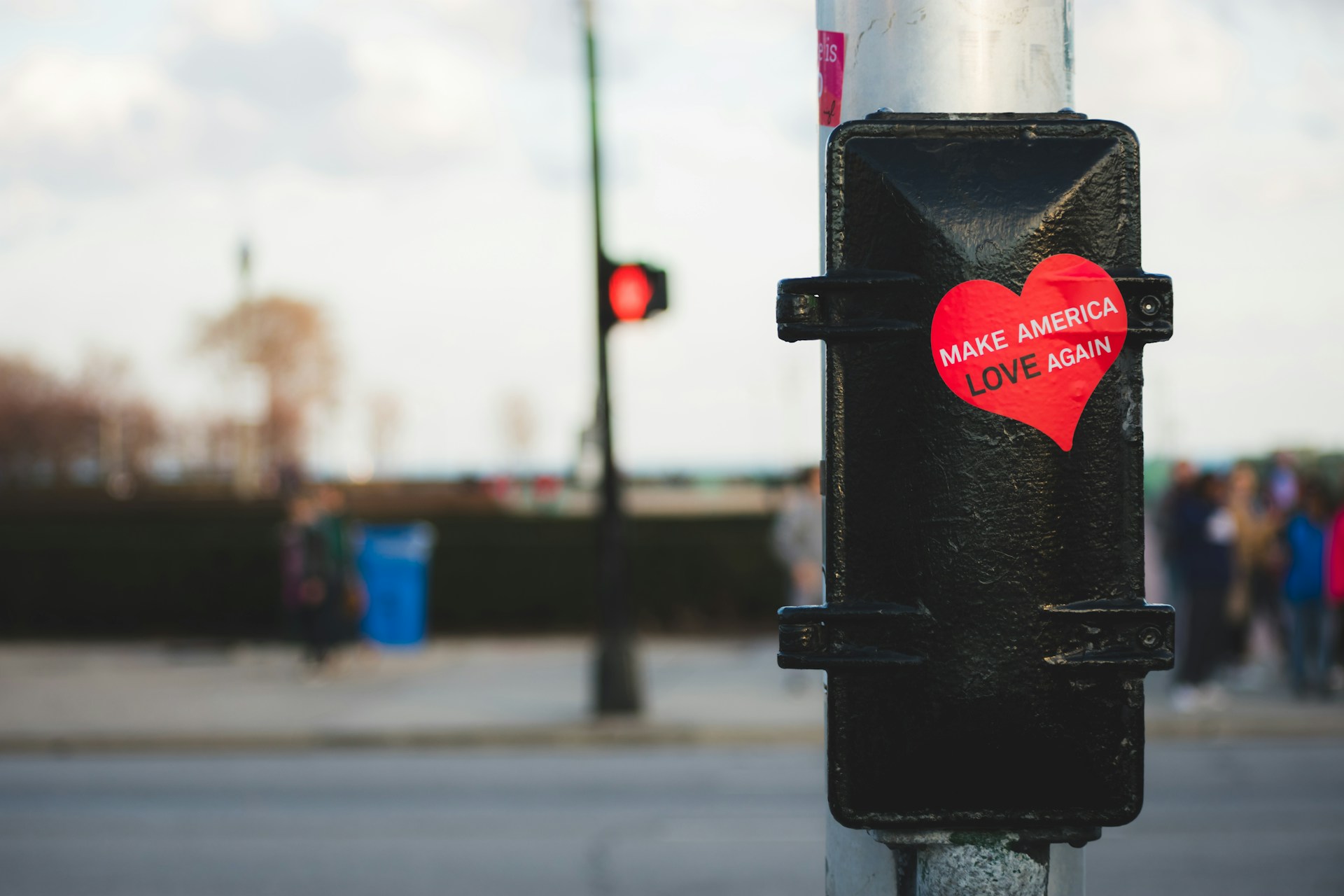
THE QUIET PART LOUD
So, 2026: new format, new ideas, new regular feature.
In the days after Trump was elected, I made this video:
TL:DW is that I can see a fundamental obstacle to being an artist under an authoritarian regime: either you make your art about what the regime is doing, in which case they kind of win, or you ignore it, in which case you are tacitly treating it as normal, in which case you are tacitly endorsing it, in which case they win.
I feel like it’s difficult to have something to say, however small your audience, if you’re not addressing the rampaging elephant in the room. But it can’t be the only thing you have to say. As we say now: joy is resistance.
So I want to pull all my thoughts on the current state of world politics into a regular, but separate, article which readers can dip into if they’re interested, but which they can just avoid if they want to.
This is the Quiet Part Loud.
Part 1 – Minneapolis: the seeds of the US resistance movement?
January 2026 feels like a turning point. Although feelings can be deceptive, because thinking back it also feels like every single month for at least a year and a half is some kind of turning point.
The year began with a dramatic escalation from the Trump administration, and I’m not going to list all the drama. However, out of all of it I think the world’s gaze has turned to the ICE occupation of Minneapolis.
And just to add this explanation once again: whilst this is a domestic US crisis, the US is still effectively the global bank, police officer, court and media provider, so I believe we should all pay attention.
I want to start by focusing on a disagreement between two influential American historians. Professor Heather Cox Richardson, who I have recommended in my newsletter, has writes a daily letter explaining the current US crisis in terms of its history, and it is read by over a million followers on Substack.
In this recent video she urged her followers to put pressure on congressional Republicans, but right now only they have any power.
Enter rising star Tad Stoermer.
He is also a scholar of American history, but specifically resistance history: those times when effective resistance movements were built and changed the countries political direction.
His latest video responds explicitly to Richardson, and other moderates, who are suggesting that Americans just need to appeal to the better nature of an openly fascist government in the middle of an uninterrupted power grab.
He is utterly scathing.
The TL:DW of this is that history tells us no attempt to appease or persuade a tyrant has ever worked. Ever.
And to suggest that only congressional Republicans hold power now is to basically give up on democracy. Power exists beyond congresses and parliaments. Citizens can resist, agitate, push back, put the regime under pressure.
Stoermer makes the point that finally we’re seeing this in the United States, in Minneapolis.
But there is such a stark, shocking disconnect between the cowardice and inertia of the Democrat leadership and the energy and activism on the ground.
About an hour ago, YouTube just fed me a great example of this: an interview with a community organiser.
Aru Shiney-Ajay describes how they all can feel the fear of living in a military occupation, but the amount of solidarity, compassion, organisation and community is like nothing she’s ever seen in over 10 years of activism.
Citizen patrols are walking the streets, and when they see ICE operatives they message their Signal chats, and then blow whistles, which summon more citizens, until eventually they outnumber ICE considerably, and the ICE abduction is aborted.
Now.
I don’t want to suggest that’s American fascism over with. It’s barely begun. But I find it hard to imagine these citizens will go back to normal after this. Once they are routinely risking their lives for each other, the desire to avoid conflict in case ‘things get bad’ is gone.
A smart government might try to roll this military occupation back, and try it incrementally at a slower pace when the country isn’t watching.
This is not a smart government.
And, although it is still early days, there are some who are saying that Trump has already lost ‘the Battle of Minnesota’.
Here’s Jamelle Bouie of the New York Times:
I’ll round up this section by taking a little detour.
There’s a creator I’ve been following – a trans academic studying the far right whose social media handle is Nope Brigade – whose videos have been getting more and more… well, terrified.
After the Charlie Kirk assassination, they said they were contemplating fleeing the US. Then they said they had decided it was time.
And then they stopped posting. For weeks.
Every now and then I’ve typed ‘Nope Brigade’ into my search, but nothing new came up.
Then, a few days ago, they posted this:
I try to remind myself, when I find myself drawn from the safety of my sofa into who is winning the sport of right vs left, that the horror has already begun for so many people.
We still have time to stop that horror spreading to the UK. But that time will soon run out.
Part 2 – Even the masters of the universe are spooked
The World Economic Forum held their annual event at Davos this month. By most accounts, the Trump crowd turned it into an absolute clown show. Here is a highlight reel:
I found this video from US media’s favourite rich smart-arse professor Scott Galloway:
I think Galloway is often funny, self-deprecating, insightful… but also a good representation of how the rich are living in a different reality.
And I think he knows it. Indeed, that video is basically Galloway talking about how none of these ‘masters of the universe’ – politicians, tech gurus, financiers, celebrities, etc. – really know what’s going on.
He talks about a sense of unease they all have. Like what’s coming next is going to be bad for everyone.
That surprised me for some reason. I suppose I imagined that it would all be a bunch of ashen-faced minions sitting round a big table while a masked chairman taps his fingers together and says “Goood… everything seems to be going to plan…”
Once again, it makes me feel like the big story of the moment is not about a bunch of Silicon Valley geniuses overthrowing democracy, or a Republican party full of mannequins being operated by unknown billionaires.
It’s about a political establishment of what David Graeber called ‘extreme moderates’ who will do anything, will cross any moral or legal line, to appease their opponents. Leaving their opponents victorious… but confused and disorientated. Like naughty children desperate to know where the boundaries are.
Let’s talk about those Silicon Valley geniuses though. Let’s talk about the modern media landscape.
Part 3 – They shoot horses, don’t they?
On New Year’s Eve, Head of Instagram Adam Mosseri published a blog post about his predictions for the future of the platform. And everyone’s been talking about it.
I’ve seen a bunch of creators complement him for his honesty and insight, and discuss how to tweak their content strategies going forward.
But for those of us who have decided to get off that ship and paddle to our own little open-web island, he… well, he said the quiet part loud.
Mosseri talks about his concern that AI slop will soon flood Instagram, and it will become impossible to establish what is real.
He suggests that, now more than ever, the creators who can be real, authentic, transparent and consistent will be the ones who stand out.
So what’s the problem with that?
First of all, he is describing a problem that is very much of his own making, as Allison Johnson of The Verge points out.
But basically, his point is…
Yes, we have already enshittified our platform so badly that it’s like a bearpit down there. And this new AI technology (which Instagram’s parent company Meta is heavily invested in) will make it much much worse. And despite Meta being one of the 10 wealthiest companies on the planet, we have decided not to invest any money in restricting or labelling AI content or generally making our platform a more pleasant place to be.
No. That is all on creators now: our dutiful little gig economy workers.
You just need to work harder, pedal faster, dance more frantically. You just need to study your analytics, outcompete your peers, and never take a day off.
And you need to be more authentic, more real. You need to put more of your actual life, your actual emotions, your actual soul into our disposable empty calorie snackable content.
Because even though you personally don’t have a snowball’s chance in hell of making a sustainable income on this platform, we can at least take all of that personal data from your content and sell it to advertisers, which is how we keep the steamroller rolling.
It reminds me of the novel / movie They Shoot Horses Don’t They, about a real life Squid Game in 1920s America where contestants had to basically dance to death for a cash prize, and the entertainment of the crowd.
But the backlash is already brewing.
Something The Verge has been talking/writing about a lot lately is that the big tech platforms have now all utterly lost the trust of the public. Any sense of the benefit of the doubt is now gone.
I’ve been thinking a lot about this interview I saw recently of comedian Chris Gethard, talking about the ‘Creator Apocalypse’.
Everyone talks about the creator apocalypse all the time, but he had some excellent points I hadn’t heard before.
He points out that the big tech platforms are now selling the idea of ‘being a DIY artist’ as a reason to use their platforms.
And because the frog has been boiling for a while, we haven’t really noticed that any trace of a real DIY artist culture was ground out long ago.
The platforms have used this as an excuse to pass all of the work and all of the expense onto the creators, who they make fight for tiny bits of attention, which the platforms can dial up and dial down at will with their algorithms.
Lots of this great discussion resonated with me, but I want to highlight this excellent point:
The platform algorithms will boost anyone talking about the problem. But they will suppress any talk of the solution.
Gethard also talks about how the big tech platforms operate like the company store in an Appalachian coal mining town. They pay you in their own currency (‘scrip‘) that isn’t usable anywhere else.
Conclusion
So all of that is pretty bleak.
But yet… here I am. On my own website. Back on the open web, and this time with a convert’s zeal.
Because, for all the nihilism of the plutocrats right now, we do still have incredibly powerful tools for communicating with each other.
I’ll end this very long rant (“If I had more time I would have made it shorter…“) with the video that inspired me to jump ship.
In this talk to South By South West, independent journalist Molly White reminds us that… “You know that websites are still a thing, right?”
Leave a Reply