
To pout or not to pout…
April 2026

A 15 year old Hamlet wannabe
This month, I’m going to get Shakespearean on yo ass. Your arse? Yo ass? Both seem wrong in this context. Anyway. I’m going down a long memory lane to the turn of the 17th century – partly due to that fantastic book on the Renaissance I recommended last month, and partly due to a bunch of random threads all coalescing.
But first, summer starts tomorrow. Sunshine, longer days, beer gardens, hayfever. Good times.
This is still more a newsletter about the battle to find the time to make music than about making music, but I’m in a bit of a lull where I actually have some free time again, and it feels like the world is opening up a fraction.
And there are a bunch of recommendations this month. Some new music, some old videos, some commentary on how undeniably unpopular AI is. And, yeah, quite a bit of Shakespeare.
But first, as I’ve had a bit more time, I’m going to dig a couple of things out of the archives of my website, starting with…

From The Vaults
EULOGIZE THIS: ILLUSIONS by RICHARD BACH

Okay, so someone did a mean tweet about my boy Richard Bach.

Fine, it wasn’t technically a tweet, and it was just an image from an Ursula Le Guin essay.
I can absolutely imagine why the commercial juggernaut that was Jonathan Livingston Seagull must have driven authors like Le Guin crazy.
But I did feel the need to do a very gentle defence to nobody in particular, because this book – Illusions – really was a ‘this book will change your life’ moment for me.
And it made me want to dig out this essay I wrote for a website (now gone) a decade ago called Eulogize This.
A friend just asked me whether this was a book to read as a cynical adult. I kind of dodged the question – the answer is probably not. But for someone looking for a ‘way in’ to philosophy, who is ready to surrender to the authority of an expert… a book that gives you permission to try to become your own expert is a little bit miraculous.

From The Vaults
O MISTRESS MINE by WILLIAM SHAKESPEARE
While we’re digging in the vault, and also doing the Shakespeares, I thought I might as well dig this out.
I recorded this over a decade ago, and emailed the American composer who wrote the original choral arrangement asking for permission. Not that it was ever gonna make any money or anything.
But he was very nice about it, so yay – thanks Matthew Harris!

Recommended
7 WAYS TO MAXIMISE MISERY
Every once in a while, I come back to the book How To Be Miserable by Dr Randy Patterson – a book I have recommended in my newsletters many times, although not for a while.
He is a psychiatrist who found out that reverse psychology could be a very effective therapeutic approach: he would ask his patience to list all of the actions that they believed would make them feel even more miserable, and then get them to examine how many they were already doing.
This was the short summary video by YouTuber CGP Grey that put me onto this book, and I think it’s a timeless classic.
Worth re-watching every couple of years, I think.
Recommended
BLACK SUN by IRMA
I first came across this artist when YouTube fed me her cover version of Thriller, which is glorious in its own right.
I’m obviously going to be biased towards singer songwriters playing on classical guitars, but this is a bop.
Even if it is pretty obviously about the constant underlying anxiety of living in America in 2026.
Recommended
SOFTWARE BRAIN by NILAY PATEL
A lot of people I follow on social media have been talking about this podcast episode from The Verge.
I mention The Verge a lot – if you are unfamiliar with them they are far and away the most influential and respected organisation in tech media.
And perhaps the most influential media channel that The Verge has is Decoder, a (now video) podcast in which the editor in chief, Nilay Patel, grills the CEOs of Microsoft, Facebook, OpenAI, you name it. And these billionaire oligarchs are scrambling over each other to appear on this show, because they know it’s the one that everyone listens to. Rupert Murdoch is a regular listener. You get the idea.
However, this episode is not an interview but a video essay.
It’s an essay on the increasing chasm how these CEOs that he is constantly interviewing see AI and how the public does.
The public hates AI. The public HATES AI. Poll after poll demonstrates this.
But the CEOs won’t accept this. They believe in their dark crispy souls that this is just a marketing problem. The public just needs to be persuaded.
And Patel has a theory why the CEOs believe this despite all evidence to the contrary.
He says they have a condition which he calls ‘software brain’.
This one is definitely worth watching, particularly if you’re looking for reassurance that these AI peddling CEOs might not know what they’re talking about.
Recommended
PHONE FREE PARTIES

This is an article from USA Today about a new type of trendy party in Brooklyn, New York.
I want to start with that, because I do think that context is crucial. What this article covers is unlikely to be happening outside of Brooklyn right now.
However, Brooklyn has a habit of being where global trends are set, particularly amongst young people. The ‘artisanal lumberjack’ hipster of the 2010s arguably began in Brooklyn.
The cultural activity that forms the focus of the Brooklyn parties in this article is being phone-free. You turn up and put your phone in a little guarded locker.
But if you read the article, this is about much more than just wanting a break from social media.
This is a generation that is actively hostile to tech. This is also a generation that is determined to build community outside it.
Recommended
ALL NIGHT LONG
YouTube served me up this incredible clip from a 1962 British movie called All Night Long, in which Patrick McGoohan plays a drum solo in a jazz club.
Patrick who?
Patrick McGoohan was a star of British TV, and occasionally cinema, best known for the 1960s TV phenomenon The Prisoner.
The most wired, intense, knife-edged actor you ever did see.
He was the clear first choice to play James Bond in the first movie, but he turned it down, instead recommending his friend Sean Connery. Why did he turn it down? Because it was full of sex and romance, and he hated sex and romance. In fact, he swore to never play apart that involves sex and romance, and to my knowledge he never did. That was Patrick McGoohan.
So stumbling across this movie scene (I’m trying to track down the movie) in which he plays an ambitious jazz drummer rolling out this incredibly intense solo where it looks like he’s plotting to murder someone is just an absolute delight to me.
However, I then found out that the story is a retelling of Shakespeare’s Othello. And he is playing Iago.
And now I want to see this film so badly…
Recommended
IF KORN WROTE MMMBOP
This is exactly what you think it is.
Unless you’ve never heard of KORN or MMMBop, in which case I don’t know what to tell you.
Recommended
SIMON RUSSELL BEALE on KING LEAR
So for reasons that will soon become apparent, I have been on a bit of a Shakespeare binge recently.
And when I think about Shakespeare I think about going to see plays when I was a teenager.
And when I think about that, I think about Simon Russell Beale playing Edgar in the 1993 Royal Shakespeare Company production of King Lear.
I saw a lot of Shakespeare productions when I was younger, and I don’t remember another occasion when one actor just seemed to be operating at a different level of talent to everyone else on the stage.
He would’ve been 32, and he was already getting talked about.
I tried to find clips of him but couldn’t – all I could find was this rather hammy TV spot on Robert Stevens, who played Lear. I did find some photos though.
Anyway, it’s a bit strange for me to watch this interview of the actor I still slightly think of as a boy wonder, now aged 65, talking about playing Lear himself.
It actually reminds me that I now think King Lear is one of Shakespeare’s least interesting plays, but that’s just me.
But SRB (as I have decided to call him) is always interesting to listen to, I think. It’s a joy to listen to anyone who’s talking about something they have thought a great deal about.

Upcoming Events
Friday 8th May

Dear Diary…

I’m going to go long on this one – bear with me, it is going somewhere.
You know when you stumble across a song or a movie clip or something that immediately takes you back to a particularly intense part of your life?
I stumbled on a clip from Mel Gibson’s Hamlet the other day, and it reminded me how important Hamlet was to me as a teenager.

Let’s just quickly address the Mel Gibson of it all. He was the first of my faves that was cancelled. In fact, he was the first example I remember of a major celebrity being cancelled. Sometimes I think the pressures of fame, and particularly social media addiction, twist otherwise good people into frankly evil ones. However I remember, just before the Mel Gibson cancellation became official, that I started to notice signs of antisemitism in his work. Gibson’s directorial debut features him teaching Shakespeare to a child and the passage they choose is the most antisemitic one from The Merchant of Venice… Anyway – not why we’re here.

My father was of a generation and background that would regularly see Royal Shakespeare Company productions in Stratford upon Avon, and as a teenager he would frequently take us, and give us a quick plot synopsis on the way there. Then he would pick our brains about them on the way home.
I became a Shakespeare stan, and that became a gateway into the literary genre of tragedy. Unsurprisingly, as a Goth-adjacent teenager, I became obsessed about it. Shakespeare, the ancient Greeks, and particularly modern playwright Peter Shaffer – author of Equus and (still my fave) Amadeus.

Now, my personality has ended up at the other end of the spectrum in the years since. As you might have gathered from this newsletter, from previous newsletters, and from songs like this and this, I’ve become kind of obsessed about how happiness works.
But as a teenager, my favourite past times were drinking vodka and orange juice, refusing to shave my almost-moustache, and wandering around quoting Hamlet.

It just felt really deep, and it felt really deep because it was perhaps the first coherent philosophy I ever had. Life more than sucked: it was deliberately conspiring against you. Or, to quote King Lear, “as flies to wanton boys are we to the gods”.
I wonder now if the reason why it seemed so compelling was because, as the 7 Ways To Maximise Misery video (and the book it’s based on) highlighted earlier, misery tends to lead to habits like stillness, varied sleep, unhealthy eating, social isolation and excessive screen time which compound the problem. And even when you choose to try to overcome the misery, the decisions that an unhappy, lonely, sleep-deprived mind make tend to fixate on the wrong solution and make the problem even worse. It’s very easy to slip into a downward spiral, and that bug in the human condition can very much make it feel like the universe is out to get you.

I did manage to climb out of that hole, however, and I think Hamlet’s most famous soliloquy specifically might have helped me to do it. It is arguably the biggest cliché in English literature, but like most clichés it’s overused for a reason.
Hamlet addresses the question: given the wretched state of the world, is the rational choice to just end it all? Not because there is some immediate crises like a painful terminal illness or intrusive thoughts, but because it is the highest philosophical truth? Are we all fools for thinking it’s noble to suffer the constant slings and arrows of fate? Isn’t it better to sling arrows back, even though you will destroy yourself in the process? Or are we all cowards because we’re afraid that there might indeed be a life after death that is even worse than this one?

The thing is, when you marinade in this stew for long enough, you start to see loose ends that need tugging on.
You start to notice that there might be some possibilities in between “suffering passively every bad thing that happens to you” and “starting a fight that gets you killed”.
You start to notice that, despite being lauded by the loud literary critics as the greatest of genres, tragedy is based on a philosophy of cynicism, and that cynicism is based on passivity. Or even cowardice. It is about constructing stories in which fate really is conspiring against the hero, and then drawing the conclusion that you might as well not even bother. ‘This is what life is like, and the universe will get you in the end.’ But anyone who actually operates in the real world and examines it honestly will recognise that this tragic type of story, whilst possible, is not universal to everyone all the time. We have agency. We can examine our problems, attempt solutions, fail, learn from our failures, fail again, keep failing, but eventually reach a point where the problem is manageable. Sometimes on closer inspection the problems melt away completely.

And yes, sometimes we are just outmatched by our problems and they destroy us, but there are other stories out there – like the movie Cool Hand Luke (spoiler for a 60 year old movie that I’m actually ambivalent about in many ways) in which the hero shows almost infinite resourcefulness and courage and still gets defeated and killed – that actually feel like celebrations of the human spirit in the face of adversity.
For those of us lucky enough to born into comfortable lives, we find that most of our problems can be dealt with and forgotten. Those who aren’t comfortable are not the victims of fate: they’re the victims of politics, and I suspect they never got tempted by the philosophy of tragedy because its flaws were immediately obvious.

Not only did Hamlet famously outgrow his passive cynicism in the story (and yes, take up arms against a sea of oppressors, and in doing so… die) but even Shakespeare outgrew his obsession with Tragedies. His ‘Late’ plays (particularly The Winter’s Tale and The Tempest) seem to pointedly start out as tragedies and then end in a much more realistic place: there is reconciliation, but still damage. There is complexity where there used to be poetic cynicism.
Anyway, having berated the philosophy of tragedy, I am actually left with a sense that there is something a bit admirable with at least having an opinion on the whole state of existence – whether good or bad. That takes a certain amount of intellectual ambition.

So What Have We Learnt?
This morning I had an idea of big enough for me to want to devote the whole newsletter to it. I journal many ideas each day on a myriad of subjects, and it can get really hard to keep track of them! So if I actually want to remember the big ones I try to find a way to squeeze them into this newsletter.
Here’s this morning’s idea.
I have often looked back on that decision by my 15-year-old self to explore philosophy with bemusement. What made this not very clever, not very popular, not very happy teenager make such a spectacularly good decision that would pay off, with interest, year on year, for the rest of his life?
I think I might know now.
I have always assumed that I ‘naturally’ transitioned from that tragedy mindset to a more mature philosophy, where I take responsibility for my own well-being. I assumed that was a fairly normal thing: teenagers are obsessed with tragedy, but after navel-gazing for a couple of years most of us come to this conclusion.
But now I don’t think that’s true at all.
I think I was extremely lucky to have an education that allowed me to do this sort of study of literature, where I was encouraged to explore and obsess this philosophy of tragedy that had been such a key inspiration to Peter Shaffer, Shakespeare and the ancient Greeks.
I found myself in this environment due to, yep, class privilege. It was a mistake to assume that’s a common experience. Sure, teenagers may be fascinated by philosophy and may want to explore the big questions in life, but they’re much more likely to be in a school or domestic environment that will ridicule them for that, rather than encourage them.
Writing essays on King Lear, Hamlet and particularly Equus (which I did a monster essay for and it was the only time I got a really high mark) gave me the structure to identify, analyse, evaluate and eventually reject this philosophy – and, had I not done that, my subsequent decision to explore philosophy would almost certainly never have happened.
I don’t think I ever would have had the confidence to explore philosophy: I would’ve assumed that it’s all too complicated. More things in heaven and earth yada yada yada.
Yes, there were plenty of other people for my privileged background who didn’t take this opportunity to build a philosophical framework. But I’ll bet there are hundreds, maybe thousands, maybe millions of people who would’ve followed the same route how do they been prompted at that age to engage with this philosophical debate.
And in terms of the natural process of growing up and taking responsibility for your own happiness…
I do frequently see this process happen with people who have experienced life-changing trauma, particularly when young. And I do also see it happen incrementally with most people, but probably way less than I assumed.
And now I wonder: can this even happen outside of that narrow window of those teenage years? Once you get older, your philosophy develops from your habits and your mistakes and your traumas, and unless you spend a lot of time in therapy, you’re probably stuck with them.
As it happened, this tragedy obsession when I was about 15 was replaced by an obsession with philosophy, triggered by that Richard Bach book, the following year – and then the year after that my new philosophy got pressure tested when my mother was diagnosed with the cancer that would eventually prove terminal. And it didn’t let me down.
Basically, what I’m trying to say is this:
Holy shit. Studying English Literature turned out be useful!
I’m as surprised as you are.

Ask me things

If you have any questions then seriously, do please leave a comment or drop me a message here. About life. About the universe. About life. About the universe. About the earth. This goodly frame the earth. About the the air, look you, this brave o’er hanging firmament, this majestical roof, fretted with golden fire.
Also MMMBop. Ask me about MMMBop.
Photo Credits
- Click on the images to see the originals. (It just means less admin for me this way.)
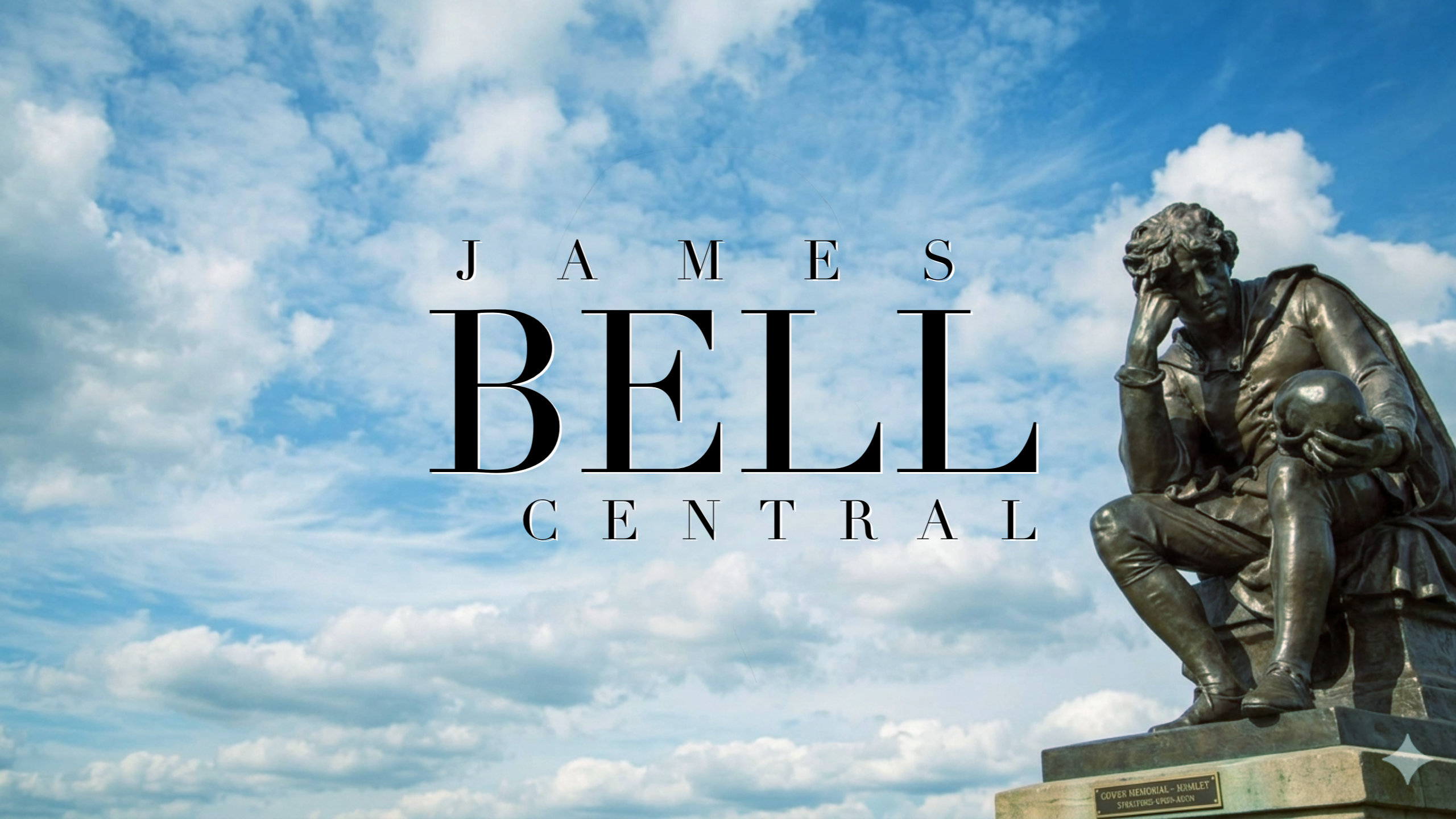
- Note: the top image (of a real statue in Stratford Upon Avon) was generated by Google Gemini AI. At some point I will actually post an ‘AI policy’, but for now: if it’s a better angle of something in the public domain, I’m happy using it.
You must be logged in to post a comment.