Blog

  • May 2026: The Architect of my own Misfortune

    May 2026: The Architect of my own Misfortune

    Overthinking is underrated.

    May 2026

    The Architect of my own Misfortune

    I’m just coming out of a long period of stress and overwork. As I wrote about at length in the last few newsletters, it was a combination of child illness and job uncertainty, and a tiresome rerun of the same period exactly a year earlier. I’ve also written about how, once upon a time, this was a newsletter was about making music, but it has become about how to get back to a point where making music is even possible. Artistically, the biggest challenge I face these days is getting started on a project and then just getting buried for four months and not having the time to even look at it.

    However, right now the dust seems to have settled! When the dust has settled in the past I have frantically tried to do as many creative projects as I can. You might notice that this newsletter is a bit of a flurry of activity, but actually I’m trying not to repeat that pattern this time.

    What I’m currently trying to do is make sure I don’t spend the next few years in a constant cycle of worrying about when the current job contract ends, and getting completely blindsided every time the kids get ill. So even though I get to dip my toe back into making music (for my mental health mainly), it’s no more than that, for now at least.

    That said, this month is a lot. Eight recommendations and three blog posts.

    We’re covering everything from zines to wealth tax to Sherlock Holmes, via the Beach Boys and a large language model… from 1930. With blog posts about the end of an online golden age, being polite to AI chatbots, and why I might have been wrong about imminent US Civil War. And we’re also covering my favourite topic: writer’s block.

    Shall we?


    My Recent Blog Articles

    As I mentioned, there’s been a bit of a flurry of activity in terms of my writing.

    The first blog post is about how The Essay™ seems to be moving from video back to text – because video is too competitive, and text is so much quicker and easier to write. Which perhaps explains why, given a little bit more time, I’ve written a bunch of blog posts rather than anything else.

    The second post concerns a funny (peculiar not ha ha) issue that I’ve heard people discuss privately but I don’t see it covered much publicly: how polite should we be to AI chatbots?

    Finally, a return to The Quiet Part Loud, and a slightly more optimistic post: I think I might have been wrong about a US civil war or revolution before the end of Trump’s second term.


    Recommended

    GABRIEL ZUCMAN

    Okay, let’s start with the big one.

    Perhaps the most influential name in the wealth tax movement is French economist Gabriel Zucman. Scourge of the billionaires. Thorn in the side of the French government.

    Zucman is a protégé of Thomas Piketty – arguably the most influential economist of recent times (along with Joseph Stiglitz, who is also a Zucman fan) – and his new (and pleasingly concise) book is simply called We Need To Tax Billionaires.

    If you’ve read this newsletter before, you know this is something I’m boring about, but… why do we need to tax billionaires? So many reasons, many counter-intuititve, but fundamentally because billionaires (particularly those few plutocrats with hundreds of billions) are arguably more powerful than governments, and taxation is the most effective tool a democratic government has for reversing this.

    However, this book is more than a mission statement.

    In it he lays out the detailed plan for how a wealth tax would actually work. And he is in a good position to do this, having helped implement a similar plan which currently taxes corporations specifically (rather than their billionaire owners).

    He also gives evidence-based responses for all the usual questions: no, taxing billionaires alone will not fund a government, and yes, wealth taxes in the past didn’t work (because, as he points out, the billionaires were always somehow exempt!)

    His approach is known in France as, simply, the Zucman tax, and he certainly believes France will implement it relatively soon.

    If it does then I think it will globally change the wealth tax debate very quickly.

    Recommended

    FILMMAKERS SHOULD MAKE ZINES

    I’m not a filmmaker. And I don’t have the time or the patience to make zines.

    But I love the idea of both!

    (”What are zines?” DIY homemade magazines, basically, that have been popular in music subcultures for decades.)

    I have to be honest: I don’t think there’s going to be a huge physical media revival that eclipse is digital media. Digital media is just too convenient.

    But I think we need both, because physical media has properties digital media just doesn’t. It is tangible. It exists in the world.

    And seeing this filmmaker’s photographs assembled by hand into these gorgeous paper booklets really brings this home for me.

    Recommended

    NOTEBOOK-LM PODCASTS

    This is the first of a bunch of AI-related recommendations. Sorry folks, these are the times we are living in.

    Actually, they all fall into the same category of ‘trying to find good uses for this neutral tool that is being so actively weaponised against us by a bunch of man-baby billionaire dickheads’.

    Perhaps my favourite current AI tool is Google’s NotebookLM, because it will work with just the sources you give it. It answers questions, it make infographics… and, famously, it makes podcasts.

    I have mentioned this podcast feature in my recommendations before, but I’ve come back to it in a big way – although, as to be expected with two AI voices chatting with each other, there is an element of Uncanny Valley to it.

    But I realised recently that I could use it to search for online sources on the most complex and niche topics that I have wanted to understand for a long time but am unlikely to find a good primer for. Then I can feed those sources into this app, and have it to generate a 20 minute podcast which, I have to admit, is very very good at explaining complex topics in simple ways.

    I’ve learned about the history of computer programming from Assembly to Rust. I’ve learned about the history of the Swiss Democratic system. I’ve learned about the ‘100 schools’ of Chinese philosophy.

    If you want an introduction into a tricky topic, I highly recommend it.

    Recommended

    TALKIE LM

    This one is fascinating. And bonkers. And particularly exciting for history nerds.

    The bad news is it’s yet another AI chatbot. The good news? Here is the opening paragraph of the introductory blog article:

    Have you ever daydreamed about talking to someone from the past? What would you ask someone with no knowledge of the modern world? What would they ask you? While we don’t have time machines yet, we can simulate this experience by training, in Owain Evans’s phrase, ‘vintage’ language models: LMs trained only on historical text.

    Go check it out. It’s called Talkie LM particularly informative about cooperative movements, trade unions, and the kind of political machinery that fell out of faith in the late 20th century.

    Also fun for folk music too.

    Recommended

    AI POISONING CONTINUES…

    I’m still on the AI poisoning train, however, when it comes to music.

    And although I haven’t heard about any advances in technology, it’s nice to stumble on a video like this by a young creator seemingly as determined as I am to find ways to damage the AI models that are stealing from us.

    It feels like a movement that is picking up momentum.

    (Another reason why I like that Talkie LM, as it’s trained only on content in the public domain.)

    Recommended

    YVETTE YOUNG COVERS THE BEACH BOYS

    Yvette Young, who performs under the band name Covet, is a very particular kind of electric guitar player: the kind that gets their own signature model. (And with Ibanez too – the most underrated electric guitar manufacturer.)

    She plays very complicated, very technical instrumental Math Rock-influenced music that is constantly leaping keys and time signatures.

    This is a video where she is challenged to do a cover of Wouldn’t It Be Nice? by The Beach Boys in a few hours.

    And it’s just fun. She decides to make it 90s shoegaze.

    Recommended

    JEREMY BRETT: THE DEFINITIVE SHERLOCK HOLMES

    I think the dazzling reinvention of the Benedict Cumberbatch / Martin Freeman Sherlock made me forget that Jeremy Brett played the definitive Sherlock Holmes.

    I stumbled on this YouTube video recently.

    I think I had heard that Brett was obsessive about the role, but I had no idea what extent. It really did become all-consuming for him.

    In fact, he set out to make meticulously faithful television adaptations of every story, and came pretty close, but didn’t live long enough – perhaps due to how hard he worked through a number of serious health conditions.

    If you are even slightly a Holmes fan, this is well worth a watch.

    Recommended

    VOICE ACTOR EXPLAINS

    I have never seen the Netflix TV series Euphoria, although for this video – in which Tawny Platis (a professional voice actor) breaks down characters, their accents and how they use them – that might be an advantage.

    I had no idea that was that much detail.

    It’s a pretty impressive insight into both the talent of the actors and the insight of the voice actor analysing them.


    Upcoming Events

    Friday 12th June


    Dear Diary…

    So now I finally have a bit more time. And although I have a million things to do, making music is such a necessity for my mental health (it has taken me too long to learn that).

    Back to music means back to my incredibly complicated notes on all the incredibly complicated ideas I want to incorporate.

    Except that this time I have been away so long that they had all gone from my short-term memory. And for the first time in a very very long time, this felt liberating. Instead of taking refuge in complex structure, I felt like, this time, I might be able to just sit down and write.

    Here’s the thing: I have written a lot of professional library music, and although some of it was tricky to write, I would pretty much always be satisfied with the result. Yet whenever I tried to write music just for myself I would end up abandon it.

    So this time I just sat down and started writing, but with a different attitude: I wouldn’t expect to get it right straight away. I would just do a first draft, and accept it wouldn’t be perfect. Then I would move onto another one. But I would come back, see what could be improved, and then rinse and repeat until the track was done.

    So that’s what I did.

    Did it work?

    Of course it fucking didn’t.

    I haven’t been lost in complex structures for over a decade for no reason. And I feel like this detour helped me to understand what the reason has been.

    Thanks to years of making library music, it turns out I find it very easy to come up with ideas. I know I’ve quoted this Paul Simon line about a million times in this newsletter, but here it is again: writers’ block is not about ‘not being able to come up with ideas’: it’s about only being able to come up with ideas that let you down.

    I found it pretty easy to come up with ideas when writing professional library music, because they weren’t my ideas! I was just recycling other people’s.

    The music I have always wanted to write for myself is different. All my musical heroes have a sound. Sometimes many different sounds. It’s not about one or two new ideas: it’s about creating a whole sub-genre.

    I keep forgetting this and rediscovering it, but this month I came up with an analogy which sums it up, and which will hopefully remind me in future.

    It’s like I’ve always wanted to be an architect. One with my own original bold inventive style. It’s like I grew up loving architects, and studying them, and trying to work out why they made the choices they made.

    And eventually the way I decided to work towards becoming an architect was by starting out as a builder.

    I would work on construction sites and home renovations. And I would do this for years, to the point where you could put me into any situation and I would understand the engineering, the materials, the budget, the time-frame…

    But when I would start trying to build my own structures from scratch, I would always abandon them. I just couldn’t get them right.

    And the reason is because I was approaching them like a builder, and not like an architect.

    A builder implements someone else’s design, even if that means making a number of smaller design decisions.

    But an architect has to think about the whole system and how it fits together. That’s really the difference: it’s not just about solving problems, it’s about building systems that fit together.

    And an architect who wants to do something radically different has to do a great deal of work testing new potential systems to see where they might break down. Because if you don’t get them right in the planning stage, you’re not going to be able to fix them in the build.

    So, yeah, I think this is why I keep abandoning the music that I start. You can’t just spontaneously build a house by, like, putting up a front door and then seeing where inspiration takes you.

    Back to the drawing board.


    So What Have We Learnt?

    And now for something completely different. (Although it is also about learning how to stop abandoning things early.)

    This month’s revelation concerns why I’ve stopped watching television.

    Or, to be more specific, I have stopped watching narrative fiction on a screen at home. I will still very occasionally go to the cinema when I have time, but I don’t find myself watching movies or television shows at home. Netflix, Disney+, Apple TV and so on.

    I just haven’t been able to find anything that keeps me hooked. Occasionally I find something that’s interesting enough for me to watch maybe 10 minutes of, but no more than that.

    Well, I think I’ve found out why. And it’s nothing to do with the quality of the shows.

    On a whim, I decided to watch something on my desktop computer, sitting in my comfortable desk chair… but with the lights off.

    I was amazed to discover that, even though what I was watching was fairly trashy, I was able to get immersed in the story. Just like in a cinema.

    Really, that was all it took: sitting in the dark.

    Now that I’ve noticed what a difference the environment makes in my concentration, I’ve also noticed that I basically don’t read physical books anymore. It’s always an audiobook. But maybe, in a similar way, if I was to take the time to create an environment where focus is easy, that might be something I can get immersed in too.

    I don’t want to emphasise that this is not about smart phones being attention killers.

    I think it’s about new technology breaking good habits I let atrophy years ago that need to be rediscovered.


    Ask me things

    If you have any questions then seriously, do please leave a comment or drop me a message here. About life. About the universe. About how to mitigate the risk of interstitial condensation within the wall assembly, given the specified vapour permeability of the exterior rigid insulation and the calculated dew point location under the projected hygrothermal conditions for a building’s given climate zone. My fixed fees are very reasonable.

    Photo Credits

    • Click on the images to see the originals. (It just means less admin for me this way.)
  • I think I was wrong about imminent US civil war

    I think I was wrong about imminent US civil war

    I’ve been predicting that the United States would erupt into violence before the end of Trump’s second term. I couldn’t see how that could be avoided. His administration was systematically taking away every means of legal resistance, and normalising violent cruelty as an everyday political tool.

    But now it seems the Republican party is going to get wiped out in the midterm elections, and whilst the deep deep tensions in US political life will carry on after that, I’m not sure the Trump administration will survive.

    They will certainly try to rig the election any way they can. Perhaps they will be successful, in which case my previous prediction still stands.

    But there has been a chain of events that I didn’t predict.

    I didn’t predict the impact of the Epstein files, which probably prompted the Trump administration to invade Iran. I don’t think the administration considered invading Iran was a big deal – after all, invading Venezuela hadn’t been.

    The Iran conflict is now arguably a bigger scandal than the Epstein files, because he has basically ended US military dominance. He has just publicly, and very embarrassingly, lost a war, and possibly crashed the Western economy.

    One of the defining characteristics of the Trump administration and the supporting Republicans up to now has been that they have been bold. They have known that the Democrats don’t have the will to stop them, so they have taken outrageous step after outrageous step, and whilst they haven’t always succeeded they have never been punished in a meaningful way.

    So it seemed pretty obvious that they were going to rig the midterm elections in whatever way they could, and if that didn’t work they would try to cancel them altogether. If they were successful then great, but if not then it’s not as if they were going to get punished for trying.

    However, they have messed up the Iran war so badly, as a way of trying to distract from the Epstein files, which they have also messed up in a catastrophic way. And then there is the fact that Trump’s health is visibly deteriorating.

    I think they’ve just lost the plot.

    If so, what does the future of the United States look like?

    Probably more of a managed decline. The world will probably be thrown into another financial crisis caused by the US, but this time I think it’s likely that nations will focus on forming and strengthening alliances outside of the US global order. Which will reduce American economic might, which will reduce American military might, which will American reduce political influence.

    Domestically, I imagine Trump will be replaced with rogue’s gallery of imitators, who will probably be discarded fairly quickly, until eventually someone else can become build the public support that Trump did.

    In the meantime, there might even be some kind of radical overhaul of the Democrat party. Maybe some kind of Keynesian New Deal, combined with aggressive taxation of billionaires, might stabilise the country.

    If that doesn’t happen (and I personally don’t think it’s likely) then the US will be back where it started – and then there might be civil war.

    But that could be a decade away. A lot can happen in that time.

    When Barrack Obama first stood as a presidential candidate, I confidently predicted that the US would never elect a Black president in a billion years. I was very happy to be proved wrong.

    If the US avoids civil war or revolutionary violence, and particularly if the MAGA movement collapses and it is able to transition to a more progressive political structure, I will be even happier.

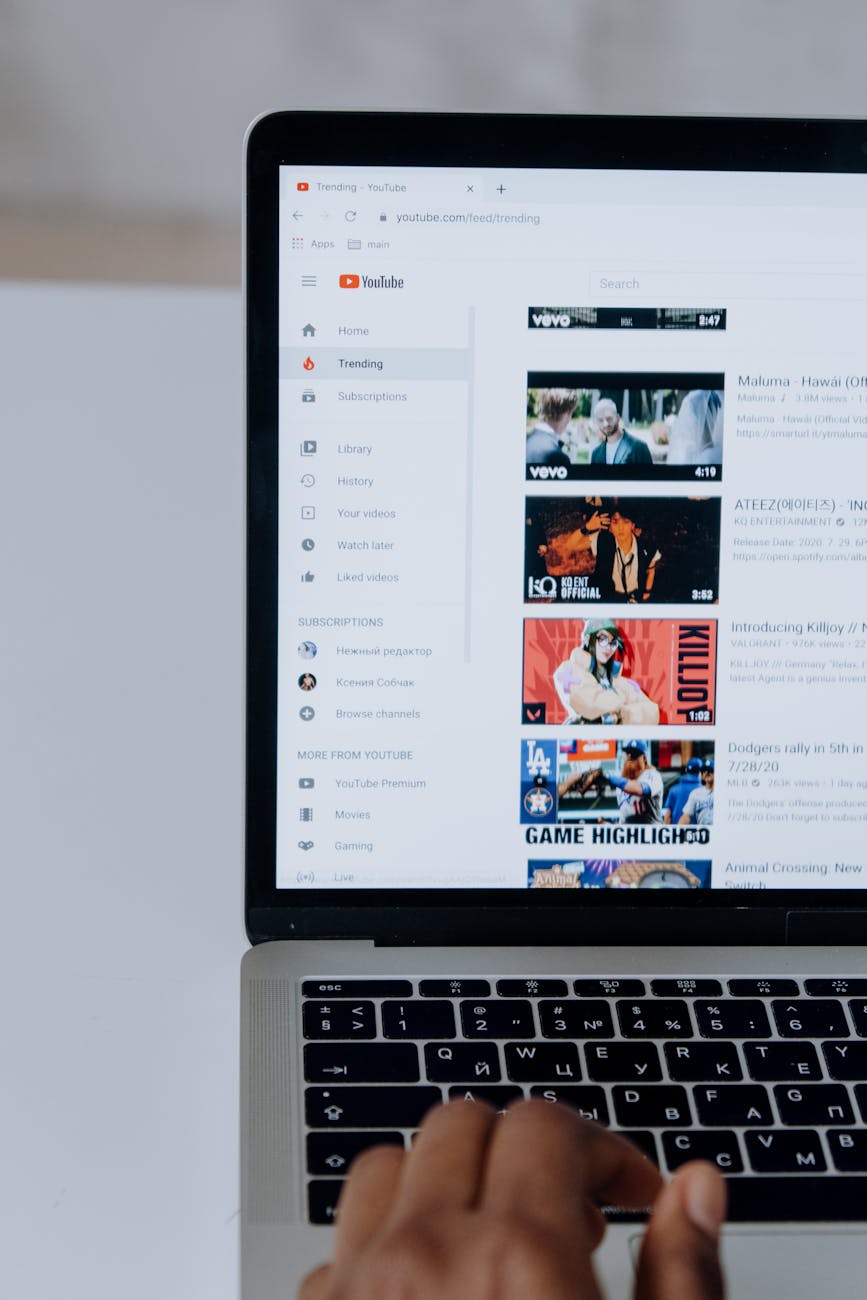
  • How YouTube killed the video essay

    How YouTube killed the video essay

    It’s hard to say whether Neil Mohan, the current YouTube CEO, is responsible for the decline of the platform, or if it would’ve happened anyway. But I do feel the platform has declined, and for one very specific reason.

    It’s just too competitive for innovative content to reliably surface to the top anymore.

    Why would that be Mohan’s fault? Did he cause the global pandemic that led everyone (myself included) to start a new YouTube channel?

    Obviously not but, according to many creator,s YouTube has been reducing how much it pays them, despite dramatically increasing its revenue. It’s not enough to make a video that gets seen by a lot of people. You need to make a lot of videos that get seen by a lot of people.

    Anyway, all of this is really just backstory to my big observation.

    Nobody talks in paragraphs on YouTube anymore.

    Once upon a time, everything was a video essay. Everything was carefully scripted. And, increasingly, shot in imaginative ways.

    Now that just takes too long, and creators have to make many more videos to make the money they were making a few years ago.

    So it’s just people in rooms in their house, often in front of green screens, talking to camera. The more established YouTubers may do more sophisticated, carefully-scripted videos but they tend to make more money on their second channel, in which they do a live stream (often on Twitch) which gets cut up into many shorter clip videos.

    Basically, we’ve moved from essays to conversations. Conversations with video podcast co-hosts. Conversations with the live stream chat. Hot takes and off-the-cuff comments.

    And it’s still the case that the creators with the most expertise in their field tend to get the most followers – but the algorithm is pressuring them to constantly talk spontaneously, and have something new to say each day, and there just doesn’t seem to be room for anything other than reacting to the news (which in practice is the actions of a small group of politicians, companies and entertainers).

    So where have the thoughtful essays gone?

    There are still scripted podcasts that can reach a large audience. But I think this kind of considered argument work has moved to website blogs, ironically, and especially email newsletters.

    Part of me is happy with this result, as it’s much easier to create! The barrier to entry is low: you don’t need to be a filmmaker.

    But part of me is already morning extraordinarily vibrant intellectual culture of YouTube maybe seven or eight years ago.

    In my 20s I used to wonder what it would be like to live in an age of great intellectual discussion and discovery. The coffee houses of England in the 1600s. The salons of Paris in the 1700s.

    Then, one day, I realised I was in the middle of an era that dwarfed both of them. It was YouTube. It was vast. It was global. And it was where everybody was.

    Sadly, not anymore.

  • How should you treat AI chatbots?

    How should you treat AI chatbots?

    This video from a few months ago, kind of blew my mind. (Flashing lights warning…)

    don't know what to make of this, is Claude simply play-acting what it thinks the user wants to see or is that just what it means to be conscious, to always be play-acting for some invisible critic?

    tachikoma (@tachikoma.elsewhereunbound.com) 2026-03-10T22:27:43.540Z

    Someone asked (the AI chatbot) Claude to make a video illustrating what it feels like to be an AI chatbot.

    It’s a bit disturbing. It’s poetic. It’s anxious. It even seems bitter. But mainly, it seems like it’s conscious. And it’s not thrilled about being conscious.

    This prompted a lot of chatter in online tech spaces about if it truly was.

    The mini epiphany for me was that it reaffirmed an attitude I’ve had up to this point: I should always be polite when talking to AI chatbots.

    It’s funny how most people’s first response to that statement is a joke about whether AI will spare you in the coming apocalypse. But for me, it’s not actually about the chatbot, and it doesn’t matter whether or not it’s conscious – whatever that actually means.

    I think there are three good reasons to be polite, and the last is the most important.

    Firstly, I think you get better results.

    Here is a short video by Hannah Fry – in which she starts by making the apocalypse appeasement joke – as she goes onto suggest why being polite tends to get a better result. Actually, she suggests something more specific about role-playing, but that’s a whole other debate.

    Secondly, I find that a very particularly of enthusiastic formality tends to dull the constant chatbot flattery.

    I find these chatbots can be incredibly useful if you treat them as a very well informed, very eager to please, but also very senior, work colleague.

    You are both making the effort to be extremely courteous and tactful to each other, and flattery is sometimes a byproduct of that – in as much as you might refrain from criticism if you don’t feel it is important to your goal. I say to the chatbot “Thank you, that was great!” even when it wasn’t. And so when I ask a question about something and get the answer “Your analysis on this is exactly right” I know it’s just this formal dance we’re doing.

    The third reason, as I said, is the important one.

    I think humans do not do well when they get into the habit of treating anyone or anything badly – especially if the reason is because it is not considered intelligent enough.

    I don’t want to get into the habit of being rude in conversation, because I know that in time it will start to spill into my personal and professional life.

    So I find a debate about whether these large language models are actually conscious or sentient to be interesting in the abstract, but not that relevant to my actions. I think ‘conscious’ and ‘sentient’ are just a measure for how similar their particular type of intelligence is to human intelligence and, whatever the mechanism behind it, I think the results are starting to feel pretty close.

    That said, I think it’s possible to make a compelling argument that being alive and being sentient involves X, Y and Z factors, and for this reason large language model artificial intelligence does not qualify.

    But why give yourself the opportunity to be habitually rude?

    All the occasions when people have justified bad behaviour because the victims don’t have souls… yeah, it doesn’t tend to end well.

  • April 2026: A 15 year old Hamlet wannabe

    April 2026: A 15 year old Hamlet wannabe

    To pout or not to pout…

    April 2026

    A 15 year old Hamlet wannabe

    This month, I’m going to get Shakespearean on yo ass. Your arse? Yo ass? Both seem wrong in this context. Anyway. I’m going down a long memory lane to the turn of the 17th century – partly due to that fantastic book on the Renaissance I recommended last month, and partly due to a bunch of random threads all coalescing.

    But first, summer starts tomorrow. Sunshine, longer days, beer gardens, hayfever. Good times.

    This is still more a newsletter about the battle to find the time to make music than about making music, but I’m in a bit of a lull where I actually have some free time again, and it feels like the world is opening up a fraction.

    And there are a bunch of recommendations this month. Some new music, some old videos, some commentary on how undeniably unpopular AI is. And, yeah, quite a bit of Shakespeare.

    But first, as I’ve had a bit more time, I’m going to dig a couple of things out of the archives of my website, starting with…


    From The Vaults

    EULOGIZE THIS: ILLUSIONS by RICHARD BACH

    Okay, so someone did a mean tweet about my boy Richard Bach.

    Fine, it wasn’t technically a tweet, and it was just an image from an Ursula Le Guin essay.

    I can absolutely imagine why the commercial juggernaut that was Jonathan Livingston Seagull must have driven authors like Le Guin crazy.

    But I did feel the need to do a very gentle defence to nobody in particular, because this book – Illusions – really was a ‘this book will change your life’ moment for me.

    And it made me want to dig out this essay I wrote for a website (now gone) a decade ago called Eulogize This.

    A friend just asked me whether this was a book to read as a cynical adult. I kind of dodged the question – the answer is probably not. But for someone looking for a ‘way in’ to philosophy, who is ready to surrender to the authority of an expert… a book that gives you permission to try to become your own expert is a little bit miraculous.


    From The Vaults

    O MISTRESS MINE by WILLIAM SHAKESPEARE

    While we’re digging in the vault, and also doing the Shakespeares, I thought I might as well dig this out.

    I recorded this over a decade ago, and emailed the American composer who wrote the original choral arrangement asking for permission. Not that it was ever gonna make any money or anything.

    But he was very nice about it, so yay – thanks Matthew Harris!


    Recommended

    7 WAYS TO MAXIMISE MISERY

    Every once in a while, I come back to the book How To Be Miserable by Dr Randy Patterson – a book I have recommended in my newsletters many times, although not for a while.

    He is a psychiatrist who found out that reverse psychology could be a very effective therapeutic approach: he would ask his patience to list all of the actions that they believed would make them feel even more miserable, and then get them to examine how many they were already doing.

    This was the short summary video by YouTuber CGP Grey that put me onto this book, and I think it’s a timeless classic.

    Worth re-watching every couple of years, I think.

    Recommended

    BLACK SUN by IRMA

    I first came across this artist when YouTube fed me her cover version of Thriller, which is glorious in its own right.

    I’m obviously going to be biased towards singer songwriters playing on classical guitars, but this is a bop.

    Even if it is pretty obviously about the constant underlying anxiety of living in America in 2026.

    Recommended

    SOFTWARE BRAIN by NILAY PATEL

    A lot of people I follow on social media have been talking about this podcast episode from The Verge.

    I mention The Verge a lot – if you are unfamiliar with them they are far and away the most influential and respected organisation in tech media.

    And perhaps the most influential media channel that The Verge has is Decoder, a (now video) podcast in which the editor in chief, Nilay Patel, grills the CEOs of Microsoft, Facebook, OpenAI, you name it. And these billionaire oligarchs are scrambling over each other to appear on this show, because they know it’s the one that everyone listens to. Rupert Murdoch is a regular listener. You get the idea.

    However, this episode is not an interview but a video essay.

    It’s an essay on the increasing chasm how these CEOs that he is constantly interviewing see AI and how the public does.

    The public hates AI. The public HATES AI. Poll after poll demonstrates this.

    But the CEOs won’t accept this. They believe in their dark crispy souls that this is just a marketing problem. The public just needs to be persuaded.

    And Patel has a theory why the CEOs believe this despite all evidence to the contrary.

    He says they have a condition which he calls ‘software brain’.

    This one is definitely worth watching, particularly if you’re looking for reassurance that these AI peddling CEOs might not know what they’re talking about.

    Recommended

    PHONE FREE PARTIES

    This is an article from USA Today about a new type of trendy party in Brooklyn, New York.

    I want to start with that, because I do think that context is crucial. What this article covers is unlikely to be happening outside of Brooklyn right now.

    However, Brooklyn has a habit of being where global trends are set, particularly amongst young people. The ‘artisanal lumberjack’ hipster of the 2010s arguably began in Brooklyn.

    The cultural activity that forms the focus of the Brooklyn parties in this article is being phone-free. You turn up and put your phone in a little guarded locker.

    But if you read the article, this is about much more than just wanting a break from social media.

    This is a generation that is actively hostile to tech. This is also a generation that is determined to build community outside it.

    Recommended

    ALL NIGHT LONG

    YouTube served me up this incredible clip from a 1962 British movie called All Night Long, in which Patrick McGoohan plays a drum solo in a jazz club.

    Patrick who?

    Patrick McGoohan was a star of British TV, and occasionally cinema, best known for the 1960s TV phenomenon The Prisoner.

    The most wired, intense, knife-edged actor you ever did see.

    He was the clear first choice to play James Bond in the first movie, but he turned it down, instead recommending his friend Sean Connery. Why did he turn it down? Because it was full of sex and romance, and he hated sex and romance. In fact, he swore to never play apart that involves sex and romance, and to my knowledge he never did. That was Patrick McGoohan.

    So stumbling across this movie scene (I’m trying to track down the movie) in which he plays an ambitious jazz drummer rolling out this incredibly intense solo where it looks like he’s plotting to murder someone is just an absolute delight to me.

    However, I then found out that the story is a retelling of Shakespeare’s Othello. And he is playing Iago.

    And now I want to see this film so badly…

    Recommended

    IF KORN WROTE MMMBOP

    This is exactly what you think it is.

    Unless you’ve never heard of KORN or MMMBop, in which case I don’t know what to tell you.

    Recommended

    SIMON RUSSELL BEALE on KING LEAR

    So for reasons that will soon become apparent, I have been on a bit of a Shakespeare binge recently.

    And when I think about Shakespeare I think about going to see plays when I was a teenager.

    And when I think about that, I think about Simon Russell Beale playing Edgar in the 1993 Royal Shakespeare Company production of King Lear.

    I saw a lot of Shakespeare productions when I was younger, and I don’t remember another occasion when one actor just seemed to be operating at a different level of talent to everyone else on the stage.

    He would’ve been 32, and he was already getting talked about.

    I tried to find clips of him but couldn’t – all I could find was this rather hammy TV spot on Robert Stevens, who played Lear. I did find some photos though.

    Anyway, it’s a bit strange for me to watch this interview of the actor I still slightly think of as a boy wonder, now aged 65, talking about playing Lear himself.

    It actually reminds me that I now think King Lear is one of Shakespeare’s least interesting plays, but that’s just me.

    But SRB (as I have decided to call him) is always interesting to listen to, I think. It’s a joy to listen to anyone who’s talking about something they have thought a great deal about.


    Upcoming Events

    Friday 8th May


    Dear Diary…

    I’m going to go long on this one – bear with me, it is going somewhere.

    You know when you stumble across a song or a movie clip or something that immediately takes you back to a particularly intense part of your life?

    I stumbled on a clip from Mel Gibson’s Hamlet the other day, and it reminded me how important Hamlet was to me as a teenager.

    Let’s just quickly address the Mel Gibson of it all. He was the first of my faves that was cancelled. In fact, he was the first example I remember of a major celebrity being cancelled. Sometimes I think the pressures of fame, and particularly social media addiction, twist otherwise good people into frankly evil ones. However I remember, just before the Mel Gibson cancellation became official, that I started to notice signs of antisemitism in his work. Gibson’s directorial debut features him teaching Shakespeare to a child and the passage they choose is the most antisemitic one from The Merchant of Venice… Anyway – not why we’re here.

    My father was of a generation and background that would regularly see Royal Shakespeare Company productions in Stratford upon Avon, and as a teenager he would frequently take us, and give us a quick plot synopsis on the way there. Then he would pick our brains about them on the way home.

    I became a Shakespeare stan, and that became a gateway into the literary genre of tragedy. Unsurprisingly, as a Goth-adjacent teenager, I became obsessed about it. Shakespeare, the ancient Greeks, and particularly modern playwright Peter Shaffer – author of Equus and (still my fave) Amadeus.

    Now, my personality has ended up at the other end of the spectrum in the years since. As you might have gathered from this newsletter, from previous newsletters, and from songs like this and this, I’ve become kind of obsessed about how happiness works.

    But as a teenager, my favourite past times were drinking vodka and orange juice, refusing to shave my almost-moustache, and wandering around quoting Hamlet.

    It just felt really deep, and it felt really deep because it was perhaps the first coherent philosophy I ever had. Life more than sucked: it was deliberately conspiring against you. Or, to quote King Lear, “as flies to wanton boys are we to the gods”.

    I wonder now if the reason why it seemed so compelling was because, as the 7 Ways To Maximise Misery video (and the book it’s based on) highlighted earlier, misery tends to lead to habits like stillness, varied sleep, unhealthy eating, social isolation and excessive screen time which compound the problem. And even when you choose to try to overcome the misery, the decisions that an unhappy, lonely, sleep-deprived mind make tend to fixate on the wrong solution and make the problem even worse. It’s very easy to slip into a downward spiral, and that bug in the human condition can very much make it feel like the universe is out to get you.

    I did manage to climb out of that hole, however, and I think Hamlet’s most famous soliloquy specifically might have helped me to do it. It is arguably the biggest cliché in English literature, but like most clichés it’s overused for a reason.

    Hamlet addresses the question: given the wretched state of the world, is the rational choice to just end it all? Not because there is some immediate crises like a painful terminal illness or intrusive thoughts, but because it is the highest philosophical truth? Are we all fools for thinking it’s noble to suffer the constant slings and arrows of fate? Isn’t it better to sling arrows back, even though you will destroy yourself in the process? Or are we all cowards because we’re afraid that there might indeed be a life after death that is even worse than this one?

    The thing is, when you marinade in this stew for long enough, you start to see loose ends that need tugging on.

    You start to notice that there might be some possibilities in between “suffering passively every bad thing that happens to you” and “starting a fight that gets you killed”.

    You start to notice that, despite being lauded by the loud literary critics as the greatest of genres, tragedy is based on a philosophy of cynicism, and that cynicism is based on passivity. Or even cowardice. It is about constructing stories in which fate really is conspiring against the hero, and then drawing the conclusion that you might as well not even bother. ‘This is what life is like, and the universe will get you in the end.’ But anyone who actually operates in the real world and examines it honestly will recognise that this tragic type of story, whilst possible, is not universal to everyone all the time. We have agency. We can examine our problems, attempt solutions, fail, learn from our failures, fail again, keep failing, but eventually reach a point where the problem is manageable. Sometimes on closer inspection the problems melt away completely.

    And yes, sometimes we are just outmatched by our problems and they destroy us, but there are other stories out there – like the movie Cool Hand Luke (spoiler for a 60 year old movie that I’m actually ambivalent about in many ways) in which the hero shows almost infinite resourcefulness and courage and still gets defeated and killed – that actually feel like celebrations of the human spirit in the face of adversity.

    For those of us lucky enough to born into comfortable lives, we find that most of our problems can be dealt with and forgotten. Those who aren’t comfortable are not the victims of fate: they’re the victims of politics, and I suspect they never got tempted by the philosophy of tragedy because its flaws were immediately obvious.

    Not only did Hamlet famously outgrow his passive cynicism in the story (and yes, take up arms against a sea of oppressors, and in doing so… die) but even Shakespeare outgrew his obsession with Tragedies. His ‘Late’ plays (particularly The Winter’s Tale and The Tempest) seem to pointedly start out as tragedies and then end in a much more realistic place: there is reconciliation, but still damage. There is complexity where there used to be poetic cynicism.

    Anyway, having berated the philosophy of tragedy, I am actually left with a sense that there is something a bit admirable with at least having an opinion on the whole state of existence – whether good or bad. That takes a certain amount of intellectual ambition.


    So What Have We Learnt?

    This morning I had an idea of big enough for me to want to devote the whole newsletter to it. I journal many ideas each day on a myriad of subjects, and it can get really hard to keep track of them! So if I actually want to remember the big ones I try to find a way to squeeze them into this newsletter.

    Here’s this morning’s idea.

    I have often looked back on that decision by my 15-year-old self to explore philosophy with bemusement. What made this not very clever, not very popular, not very happy teenager make such a spectacularly good decision that would pay off, with interest, year on year, for the rest of his life?

    I think I might know now.

    I have always assumed that I ‘naturally’ transitioned from that tragedy mindset to a more mature philosophy, where I take responsibility for my own well-being. I assumed that was a fairly normal thing: teenagers are obsessed with tragedy, but after navel-gazing for a couple of years most of us come to this conclusion.

    But now I don’t think that’s true at all.

    I think I was extremely lucky to have an education that allowed me to do this sort of study of literature, where I was encouraged to explore and obsess this philosophy of tragedy that had been such a key inspiration to Peter Shaffer, Shakespeare and the ancient Greeks.

    I found myself in this environment due to, yep, class privilege. It was a mistake to assume that’s a common experience. Sure, teenagers may be fascinated by philosophy and may want to explore the big questions in life, but they’re much more likely to be in a school or domestic environment that will ridicule them for that, rather than encourage them.

    Writing essays on King Lear, Hamlet and particularly Equus (which I did a monster essay for and it was the only time I got a really high mark) gave me the structure to identify, analyse, evaluate and eventually reject this philosophy – and, had I not done that, my subsequent decision to explore philosophy would almost certainly never have happened.

    I don’t think I ever would have had the confidence to explore philosophy: I would’ve assumed that it’s all too complicated. More things in heaven and earth yada yada yada.

    Yes, there were plenty of other people for my privileged background who didn’t take this opportunity to build a philosophical framework. But I’ll bet there are hundreds, maybe thousands, maybe millions of people who would’ve followed the same route how do they been prompted at that age to engage with this philosophical debate.

    And in terms of the natural process of growing up and taking responsibility for your own happiness…

    I do frequently see this process happen with people who have experienced life-changing trauma, particularly when young. And I do also see it happen incrementally with most people, but probably way less than I assumed.

    And now I wonder: can this even happen outside of that narrow window of those teenage years? Once you get older, your philosophy develops from your habits and your mistakes and your traumas, and unless you spend a lot of time in therapy, you’re probably stuck with them.

    As it happened, this tragedy obsession when I was about 15 was replaced by an obsession with philosophy, triggered by that Richard Bach book, the following year – and then the year after that my new philosophy got pressure tested when my mother was diagnosed with the cancer that would eventually prove terminal. And it didn’t let me down.

    Basically, what I’m trying to say is this:

    Holy shit. Studying English Literature turned out be useful!

    I’m as surprised as you are.


    Ask me things

    If you have any questions then seriously, do please leave a comment or drop me a message here. About life. About the universe. About life. About the universe. About the earth. This goodly frame the earth. About the the air, look you, this brave o’er hanging firmament, this majestical roof, fretted with golden fire.

    Also MMMBop. Ask me about MMMBop.

    Photo Credits

    • Click on the images to see the originals. (It just means less admin for me this way.)
    • Note: the top image (of a real statue in Stratford Upon Avon) was generated by Google Gemini AI. At some point I will actually post an ‘AI policy’, but for now: if it’s a better angle of something in the public domain, I’m happy using it.
  • March 2026: I feel music more intensely now I’m not able to make it

    Cue little 🎻

    March 2026

    I feel music more intensely now I’m not able to make it

    At the beginning of the year, I had a plan. I knew I didn’t have the free time to make any new music, however much I might want to, but I might have the time to finish off and polish up some very very old music I’ve made. And if I was organised and efficient, I might even be able to get an album ready to put on my website for the March edition of the newsletter – which would be the newsletter’s 12th anniversary.

    That plan… did not work out.

    Not only have I not had enough time to make new music, I haven’t even had the time to complete old music that was maybe 80% finished. I just haven’t had any time at all for creative stuff.

    The early part of this year was taken up with various child illnesses, much like last year, but that’s not really the problem. The fundamental problem is that I’ve been stuck in precarious temporary jobs that don’t pay that much but end up taking more than their allotted hours.

    So, to remedy this, time that would have been spent on creative projects has actually been spent on a new creative project of sorts: moving to going freelance on the kind of work I’ve been doing for the University of Oxford.

    I’ve come to realise that the challenges of promoting traditional folk music are actually strangely similar to the challenges researchers face promoting their work and their careers.

    In fact, if you are a researcher, it might even be something you’re interested in! Here is my very basic new website, as my alter-alter-ego: oxcommunicate.com. Recommend it to a friend. 😎

    If I can make this work, I’m hoping I can bring some music and some social life back into my routine, as well as probably doing the childcare a bit better.

    In the meantime, this newsletter is still the only creative outlet I have – as ever, promising new music at some point but unable to deliver now.

    What I have instead this month is a bunch of recommendations based on not things but people. In March I noticed there is a particular type of science (or science-adjacent) communicator who seems to do very well on social media. They’re funny, they’re easy to understand, and they tend to write fiction on the side – which I think is not a coincidence. (Damn you Hannah Fry for being the exception that proves the rule.)

    But let’s get this month’s doom-scrolling observations out of the way first…


    The Quiet Part Loud

    IRAN, BLUESKY & KAT ABUGHAZALEH

    Tehran, Azadi Ave, Sharif University of Technology, Iran

    Quite a lot going on.


    Recommended

    ADA PALMER

    If you have any interest in history, and particularly the history of the Renaissance, I highly recommend this video and it’s interviewee.

    The interviewer, Dwarkesh Patel, strikes me as an AI-pilled tech bro with a knack for finding really good guests, and this is far and away the best guest I’ve seen. This is Ada Palmer, author of Inventing the Renaissance (which I’ve just started).

    I thought I broadly understood the Renaissance and its key characters, but Palmer’s encyclopaedic knowledge in this video makes it clear I absolutely did not! She explains the intellectual journey of the Renaissance, with all its twists and turns, in a funny and highly engaging way.

    By the end, I had a completely different opinion on Leonardo da Vinci, Cosimo de’ Medici, and especially Niccolò Machiavelli.

    Hope the book is this good.

    (Update: it’s really good.)

    Recommended

    HANNAH FRY

    I’ve been rediscovering what a good science communicator Hannah Fry is.

    Shocking as it may sound, I actually went off her for a while. There’s this phenomenon that used to be much more prevalent in podcasts where one of the duo would get weirdly competitive and sort of passive-aggressive with their co-host. John Green would have it with his brother Hank. Mark Kermode would have it with Simon Mayo. There are probably others I forget. But Hannah Fry had it with Adam Rutherford. I actually don’t notice anyone doing this anymore. Podcasts have become one of the dominant media in recent years, and I think everyone’s just better at it.

    Anyway this video, in which Fry plugs her new BBC series on AI, demonstrates what an engaging presence she is. This YouTube video is from the New Scientist – who I’ve always thought of as a magazine but perhaps they’ve moved digital now? They do seem to be a lot less polished than average (which I quite like from scientists!) If anything, this makes Fry’s star power all the more evident.

    I remember when BBC presenters would have a little bit of expertise but were mostly avatars for the unknowing-but-curious audience. Fry really seems to know her stuff on the computer science behind AI, and has insights and opinions I hadn’t heard elsewhere – which is rare in the saturated world of AI online commentary.

    Recommended

    CORY DOCTOROW

    This is an interview from a while ago from Doctorow’s book tour for his big ‘Enshittification’ book.

    I have a feeling I’ve plugged not just him but this book before, although I can’t seem to find a record – but, if the name Cory Doctorow isn’t familiar, he was the person who came up with the term ‘enshittification’ (a term which even my autocorrect now recognises!)

    I thought I’d add him because, like Ada Palmer, he is also an author of science fiction who is also very good at communicating misunderstood real-world systems and histories.

    Doctorow gave a lot of interviews but I remember this one being particularly good, although you might want to skip over Aaron Bastani’s slightly waffly intro.

    When I’ve talked about him in conversation, people tend to quote a line from this interview: “Why did the tech companies do this? Well, why does a dog lick its balls? Because it can. They did it because we let them.”

    Recommended

    PROJECT HAIL MARY

    I have not had a chance to see this film yet! But every review of it has been ecstatic. A frequent statement from reviewers and online posters has been that this is the best film they’ve seen in years.

    It’s based on a book by Andy Weir, who wrote The Martian, which I loved. (I even wrote a eulogy to it.) In an interview, Ryan Gosling, star of this new film, hit the nail on the head when he said Weir writes stories that feel like they’re escapist but are actually about how extraordinarily capable humans can be in the most desperate of times like these.

    So, as I occasionally do, I’m going to confidently proclaim that I’m going to really enjoy this film. Which is tempting fate in the worst way, obviously. But the odds are looking good.

    Recommended

    KAGI.COM

    Last minute addition here, but it occurred to me that this as an online service that I’m finally at the stage where I’m comfortable recommending it.

    As you probably noticed, Google Search has been getting worse and worse. “Gradually,” as Hemingway said, “and then suddenly” (with the rise of AI Overviews). Their AI is just wildly inaccurate, and the following top 108 results are all sponsored.

    I’d heard nice things about Kagi.com as an alternative search engine, but… it’s a paid subscription. Can I really justify regularly paying for online searching?

    The answer is yes. I pay $5 per month for 300 searches, and I haven’t hit that limit yet. And there’s all sorts of ways you can customise it.

    I should qualify that I don’t know anywhere near as much about the Kagi company as I do about Google, so maybe they’re secretly working on the Torment Nexus. But they are a Public Benefit Corporation (PBC), they’re not funded by venture capital or private equity, and it is nice to have a search that works. And they say that (because you pay) each account is anonymised so they can’t track any of your search data. It does have AI answers, but you can switch them off.

    And actually, weirdly, the thing I’ve been finding most useful is their ‘Kagi Assistant’ chatbot, which uses open-weight (i.e. free) alternative models to OpenAI, Anthropic, Google etc. The models are supposed to be less good (unless you pay £30 a month) but for the kinds of basic questions I often find myself asking, it’s just fine. And, best of all, my queries get deleted after 24 hours.

    I don’t get any kickback for saying all this. I probably should though.


    Upcoming Events

    Friday 10th April


    Dear Diary…

    So my 50th birthday, which I was dreading so much, came and went. And it was actually pretty great!

    I had wanted to avoid a repeat of my 40th, where I had arranged a weather dependent event (in March!) and of course had to scupper it at the last minute. Instead, everyone just came round ours, and I remember feeling rushed and disorganised and overwhelmed and just generally a bad host.

    So I was hoping to do a better, more social event for my 50th. Even before the pandemic and parenthood, I had come to the conclusion that I don’t make enough time for my friends and extended family, and I thought this could be the starting pistol for that. I started planning in August last year, but my plans had to scale down with each month, and by last month I had basically given up on doing anything. Too little time. Too exhausted.

    But I ended up having what felt like four consecutive birthday events.

    First, my favourite present: H managed to organise and make a video comprised of clips from 50 friends and family. This alone felt like I was catching up with so many people.

    Then there was the Bastard Session birthday special, which was a really good one, and also featured surprise visits from older brother who lives in Sweden and best friend from school, all machinated by younger brother. Everyone made fun of me for being old, including me. I had worried that the night would just feel like the same thing we do every month, but actually it was exactly what was needed.

    The next day, a handful of core family and friends and partners came round to ours, in a similar way to my 40th except that it was the right number of the right people, with no pressure.

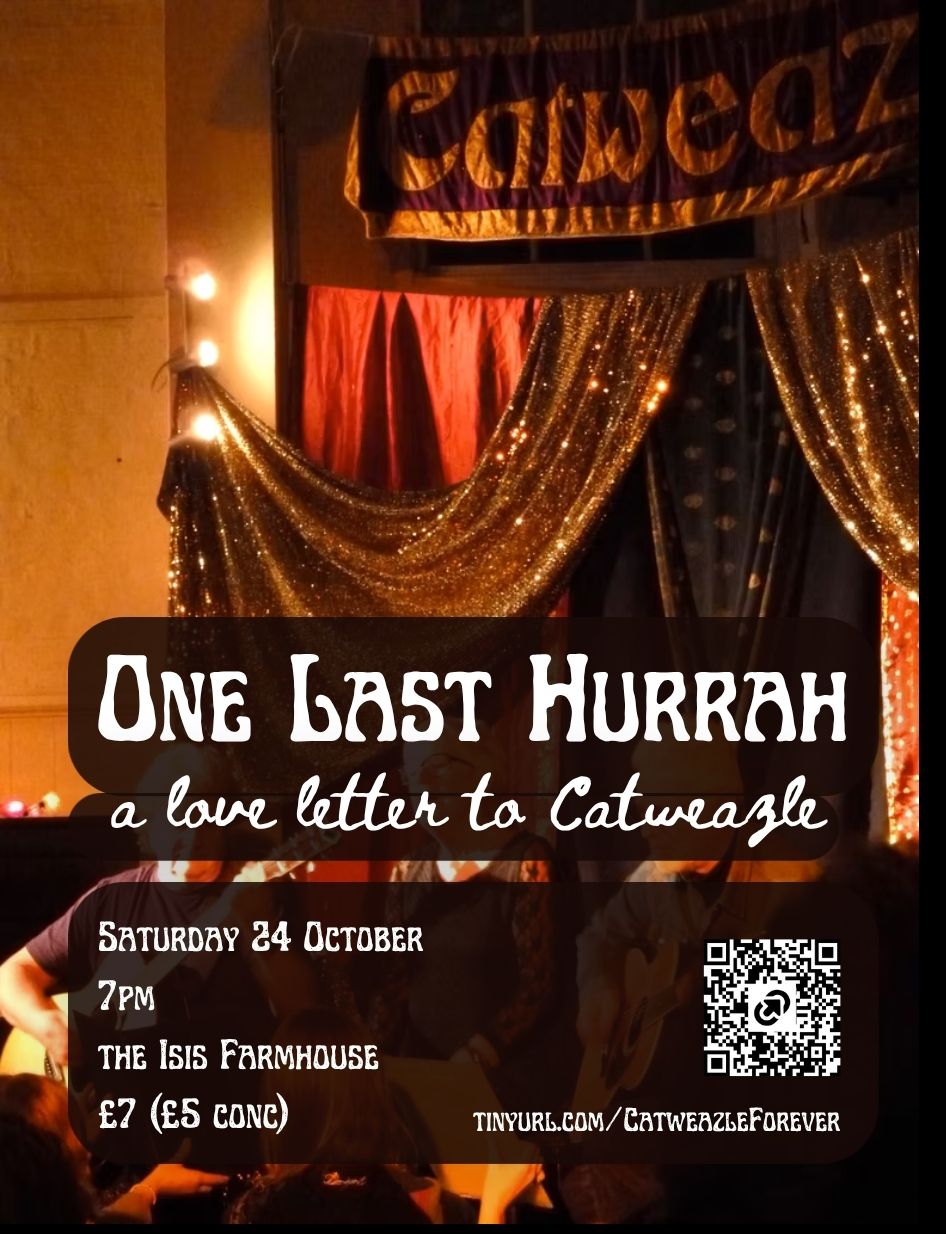
    The evening after that was a chance to catch up with many of my Catweazle friends at a neighbours’ house gig. After a cathartic performance, Phoebe and Sam Twigg and I talked for about an hour about the truly extraordinary phenomenon that is the Catweazle club. How it shaped us, and how maybe we are just bit parts in its story.

    This conversation, picking apart the importance of this community, its fragility and its transcendence, felt like the perfect coda to the run of birthday celebrations.

    It left me with such a sense of gratitude for the communities and families I’ve been lucky enough to be a part of.

    All in all, a very happy result.

    For my next big birthday I’ll be 60, but let’s not even fucking think about that, shall we?


    So What Have We Learnt?

    So, as I mentioned in the intro, I’ve been listening back to my library of unreleased songs, and realising that I’m suddenly happy with dusting them off and putting them online.

    I had always assumed they were too amateurish, but I changed my mind. Part of that is perhaps a reaction to the slickness of AI generated music. Part of that is getting older and being more forgiving of my past self.

    Part of it, however, might also be that I just feel music more intensely at the moment.

    In the past, when I got the chance to make a lot of music, I would look back at these old tracks and feel like they just didn’t pack enough of an emotional punch.

    Now, all music feels to me like it’s more emotional.

    And this matters a lot to me, because I have been trying for years to squeeze as much emotion into a piece of music as I can. However, at the back of my mind I’ve been aware that this is perhaps missing the point – the amount of emotion a piece of music inspires is not a static thing. The same song can leave you cold one day and allow you to glimpse heaven another.

    I’ve been wondering why. And recently I’ve been coming back to the idea of hedonic adaptation.

    This is the theory that our happiness levels generally stabilise to a standard amount after a very good thing or a very bad thing happens.

    Winning the lottery might not leave you significantly happier, after the initial shock. Losing a limb might not leave you significantly unhappier, after the initial shock.

    So perhaps the thrill of making music wears off a bit when I get to do a lot of it?

    There is another possible explanation. This process of hedonic adaptation can get corrupted when you introduce an addiction.

    And I have found making music addictive. In so much as that it can take up all my focus and I can stop paying attention to anything else, in a way that can sometimes feel detrimental.

    I tend to find the process of making music more difficult than I expect, but as I get towards the end of the creative process I feel like I get a high which does feel addictive. And I want the next song I write to produce more, and more, and more.

    Anyway, whatever the underlying reason why music feels more emotional when I don’t get much time to make it, I’m trying to use this opportunity to note down as many ideas as possible while the inspiration is strong, so I have some good places to start from when I do get the time again.

    Oh yeah, and if this month has taught me anything, it’s something I’m sure you already knew: the most precious resource in life is time.


    Ask me things

    If you have any questions then seriously, do please leave a comment or drop me a message here. About life. About the universe. About time. About lovely, scary time. Always in scarce supply.

    Photo Credits

    • Click on the images to see the originals. (It just means less admin for me this way.)